Discount Products: Look through products available for a 25% – 50% discount in 2020. The items provided on a first come, first serve basis. View Discounted Products
Presented by Ben Schmidt, Ph.D., Senior Staff Scientist
July 14, 2022 at 10:00 a.m. CST
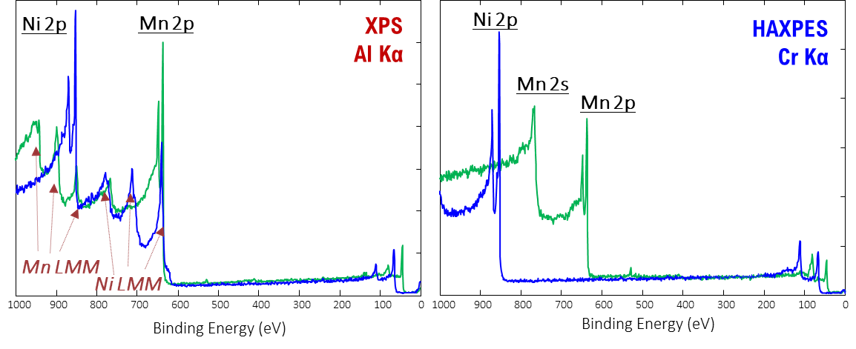
X-ray photoelectron spectroscopy (XPS) is a commonly used surface analysis technique for elemental and chemical characterization of the top few nanometers of a material. However, analysis of some materials can be tricky when using the traditional monochromatic Al X-ray source due to effects of adventitious contamination, buried interfaces, or spectral overlaps. With the advent of lab-based hard X-ray spectrometers (HAXPES), higher energy X-ray probe beams allow the collection of photoelectron signals from deeper in the material, thereby minimizing these effects. Additionally, it is possible to perform ion beam sputter depth profiling while minimizing the effect of atomic mixing or chemical reduction often seen with an Al X-ray source.
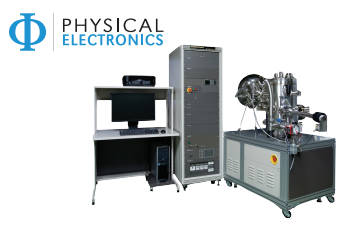
In this webinar, Ben will discuss recent developments on the PHI Quantes Scanning XPS/HAXPES Microprobe instrument, which utilizes both Al Ka (1486.6 eV) and Cr Ka (5414.8 eV) X-ray sources for XPS and HAXPES analysis, respectively. Significant advances have been made in developing sensitivity factors for quantitative HAXPES analysis, as well as software improvements for data collection and processing. Several application areas will be highlighted to show the advantage of the Cr X-ray source in analysis of battery materials, microelectronics, carbon-containing materials, and perovskites.
In drug development many applications are found for lipid-based nanoparticles (LbNPs) as successful transporters for poorly water-soluble drugs and oligonucleotides in gene therapy.
At Physical Electronics, the innovation never stops. And as the sole supplier of PHI products in Canada, SRC can help you leverage PHI innovation to achieve your goals.
For today’s advanced materials
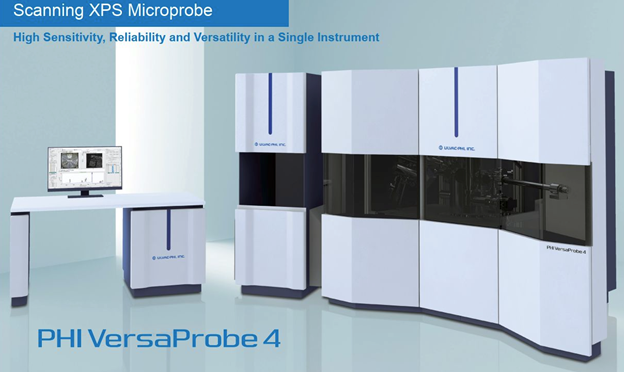
The PHI VersaProbe 4 is a highly versatile, multi-technique instrument with PHI’s patented, monochromatic, micro-focused, scanning X-ray source. The instrument offers true SEM-like ease of operation with superior micro-area spectroscopy and excellent large-area capabilities. The fully integrated multi-technique platform of the PHI VersaProbe 4 offers an array of optional excitation sources, sputter ion sources, and sample treatment and transfer capabilities. These features are essential in studying today’s advanced materials and supporting your material characterization.
The new PHI VersaProbe 4 has improved spectroscopic performance, new large area imaging and mapping capabilities, and environmentally friendly modern configuration with efficient power consumption, faster pump-down and ergonomic design.
The PHI VersaProbe 4 offers:
Intuitive sample navigation and confident analysis area identification
Optimized depth profiling
Superior micro-area analysis
Suite of specialized solutions for in-situ characterization of advanced materials
PHI—trusted by researchers the world over
Publishing recent discoveries in science and technology in peer-reviewed literature is a critical function of members of the research community. In 2021 over 4500 scholar publications, including peer-reviewed articles and book chapters, were published using PHI XPS instruments. On top of this there were more than 60 papers published in the high-impact journals (Nature and Science group). The new PHI VersaProbe 4 will reinforce the trust that researchers have in PHI instruments.
Contact
To learn more about the new PHI VersaProbe 4 or to request a quote, contact us at SRC. We’d be delighted to put PHI innovation to work for you.
Additive manufacturing (AM), also known as 3D printing, is a transformative/disruptive approach to industrial production in a broad range of fields that cost-effectively enables the creation of lighter, stronger, and more geometrically complex parts and systems. It is another technological advance made possible by the digitization of processes. AM uses data computer-aided-design (CAD) software or 3D object scanners to direct hardware to deposit material, layer upon layer, in precise geometric shapes. As its name implies, AM adds material to create an object. By contrast, when you create an object by traditional analog methods, it is often necessary to remove material through milling, machining, carving, shaping or other means.
The ability to design and print virtually any object shape using a diverse array of materials, such as metals, polymers, bioinks—and ceramics—has given rise to the use of AM in biomedicine in both research and clinical settings. The world of 3D ceramic printing has come a long way since the 1980s, when it was considered suitable only for the production of functional or aesthetic prototypes, and a more appropriate term for it at the time was “rapid prototyping.” This article reviews the additive manufacturing of ceramics in biomedicine, as well as the technology and products of a leading SRC supplier, 3DCeram.
The additive manufacturing of ceramics for biomedical applications allows for the creation of bone substitutes, custom implants and surgical tools. The exceptional biocompatibility, extremely regular porous structure, capacity for the formation of complex geometrical shapes and mechanical strength are the main qualities of these 3D bioceramics. 3Dbioceramics can also be produced cost-effectively and relatively quickly and, when incorporated into the human body, provide more safety and comfort for the patient and require less follow-up after surgery. Given these many attributes, the future of additive manufacturing of ceramics for biomedical applications is extremely bright and the market is expected to grow by leaps and bounds as healthcare systems seek to control spiralling patient care costs, and applications not previously considered advisable or possible continue to emerge.
The medical sector has always been interested in cutting-edge technologies, which is why 3DCeram began working with biomedical players in 2005. In subsequent years 3DCeram has focused on developing a mastery of the 3D printing ceramics process, 3D printers, ceramic materials and services encompassing maintenance and training. Today, the company is the undisputed global leader in the additive manufacturing of ceramics for biomedical applications.
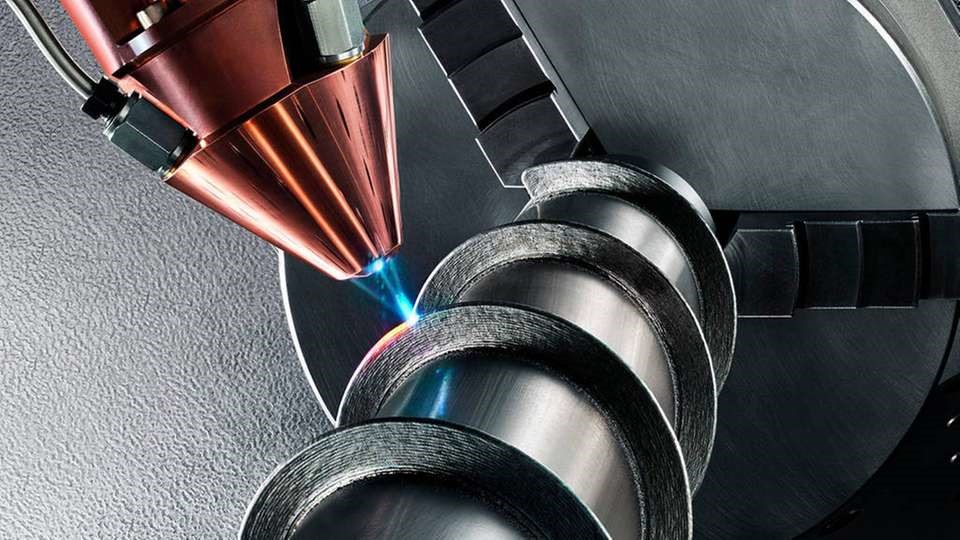
3D Ceram leverages stereolithography (SLA) 3D printing technology to manufacture custom-made or small series bone substitutes and cranial or jawbone implants. The technology can be used to produce ceramic components layer by layer using a laser that polymerizes a paste composed of photosensitive resin and ceramic. The parts are then subjected to a heat treatment (debinding followed by sintering) that eliminates the resin and densifies the ceramic.
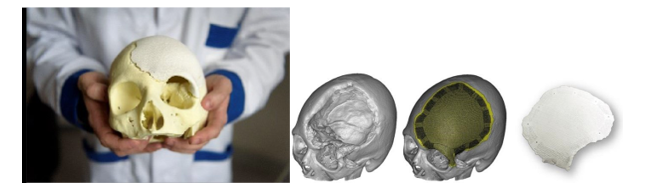
Custom-made HAP implant for the repair of large and complex craniofacial bone defects
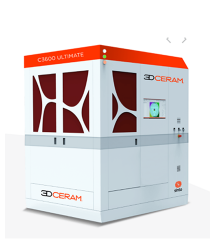
With over a decade of medical 3D printing experience under its belt, 3DCeram produces a range of ceramic 3D printers and materials that are suitable for biomedical applications, including the accessible C100 EASY FAB system and the production-grade C3600 ULTIMATE. The company offers a number of materials that have been specifically formulated for biocompatibility and osteointegration, such as HAP (Hyd roxyapatite), TCP (Tricalcium Phosphate) and ATZ (Alumina Toughened Zirconia). 3DCeram’s products are suitable for many types of biomedical applications, from cranial and jawbone implants to dental devices.
Ceramaker 3600 ULTIMATE
In the biomedical sector, however, the ability to 3D print highly advanced or customized devices is not quite enough: all medical parts and products must undergo and meet stringent requirements. When it comes to the adoption of ceramic 3D printing in the medical sphere, certifications have not been a deal breaker, but they have created a bottleneck. CDCeram has pursued streamlining of the certification process for its biomedical customers through a new partnership with Gregory Nolens.
With a PhD in Biomedical Sciences and expertise in additive manufacturing and medical regulations, Gregory Nolens is uniquely equipped to help biomedical companies and players to not only implement ceramic 3D printing for medical device development and production, but to obtain the necessary certifications.
Contact
SRC is proud to represent 3DCeram in Canada and make available to our Canadian customers in the biomedical field the full range of 3DCeram products. Click here to contact SRC to learn more.
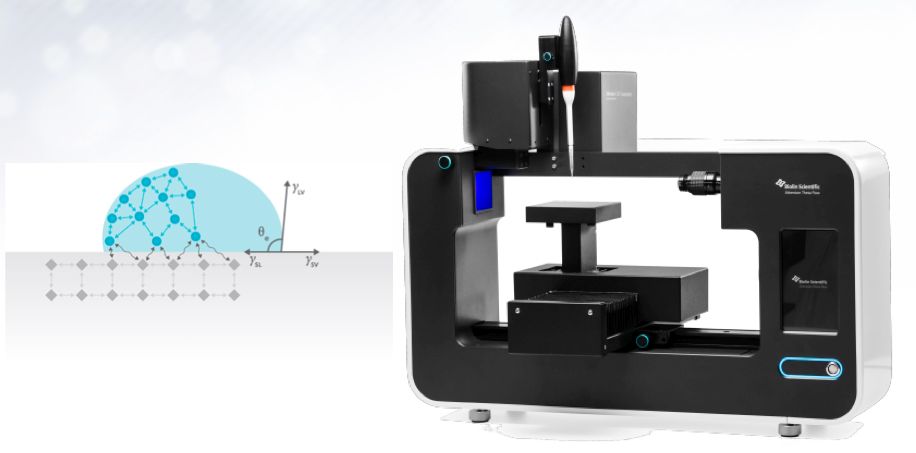
Join us for a 1 hour seminar about Wettability and Adhesion, where we will go through how to utilize contact angles for wettability measurements and evaluation of adhesion. We will also address the theory behind them and emphasize strategies how to apply these measurements to real, non-ideal surfaces which may be heterogeneous in both surface chemistry and surface roughness.
Wettability and adhesion are key parameters in numerous industries such as coatings, biotechnology and electronics. The seminar will include lecture and a demonstration of how to account for the surface roughness and wettability determination for advanced research.
In collaboration with Biolin Scientific AB, we warmly welcome you to take part in the upcoming Biolin Scientific Attension Online Seminar 2021, Practical applications on surface tension & contact angle. The seminar will be hosted in two sessions on the 30th of November 2021 & participation is 100% free! Sign up today to hear what the subject matter experts have to say about their latest research.
Check out some of our guest speakers!
Iria Torres
Researcher
Sanofi – Frankfurt
Katja Klinar
Researcher at University of Ljubljana,
Slovenia
Jakub Sandak
Researcher at
InnoRenew CoE & University of Primorska
Andrew White
Scientist
at BASF Agricultural Solutions
Timo Kotilahti
Research
engineer in Aalto University
Dr. Ankit D.Kanthe
Analytical Scientist at
Bristol Myers Squibb
Morning session
Time
Presentation
Speaker and title
09:00 – 09:10 am
Welcome/Introduction
Biolin Scientific
09:10 – 09:30 am
Surface tension evaluation of small volume samples through the pendant drop method
Iria Torres Teran, Sanofi
09:30 – 09:50 am
Surface tension measurements of METNINTM lignin fractions
Petri Ihalainen, Metgen
09:50 – 10:10 am
Using Theta Flex for bioproducts research at Aalto University
Timo Kotilahti, Aalto University
10:10 – 10:30 am
TBD
10:30 – 11:00 am
Improve Accuracy and Repeatability of Contact Angle Measurements with the Theta Flow
Susanna Laurén, Biolin Scientific
11:00 – 11:15 am
Break
11:15 – 11:35 am
Assessing surface properties of heterogeneous and porous biological origin building materials, such as wood
Jakub Sandak, Innorenew
11:35 – 11:55 am
Optimizing characterization of wetting behaviour of milk powders by contact angle measurements
Riitta Partanen, Valio
11:55 – 12:15 pm
Wettability in gluing and finishing processes of lignocellulosic materials
Tomasz Krystofiak, Poznań University of Life Sciences
12:15 – 12:45 pm
Importance of goniometry study in membrane science
Joanna Kujawa, Nicolaus Copernicus University
12:45 – 1:30 pm
Q&A
All times are in CET (Central European Time)
Evening session
Time
Presentation
Speaker and title
4:30 – 4:40 pm
Welcome/Introduction
4:40 – 5:00 pm
Digital microfluidics: Electrowetting
Katja Klinar, University of Ljubljana
5:00 – 5:20 pm
TBA
5:20 – 5:50 pm
Dynamics of mixed antibody-excipient adsorption at an air/water interface
Ankit Kanthe, Bristol Myers Squibb
5:50 – 6:20 pm
Live demo Theta Flow
6:20 – 6:35 pm
Break
6:35 – 7:05 pm
Probing Lipid Monolayers with Pendant Drops: From Surface Pressure Isotherms to Interfacial Rheology
Andrew White, University of California, Riverside
7:05 – 7:25 pm
Characterization and analysis of hydrophobicity, interfacial tension and contact angle of acetyl TAG used for various food applications.
Advances in battery technologies are at the forefront of a sustainable global economy, and refinements that further reduce the cost and optimize the performance of batteries are essential. SRC, through our technology partner suppliers, provides laboratories pursuing these refinements with pivotal technologies for battery R&D and QA/QC. Please keep reading to learn more about instrumentation from SRC and our innovative suppliers.
X-ray Photoelectron Spectroscopy(XPS) from Physical Electronics (PHI) is an important tool for
battery material research and development. XPS can provide insights into battery performance at realistic operating conditions, and help determine the precise location of interfaces between battery components. Electronic band structure of organic and inorganic materials can also be characterized using XPS.To learn more, click here to download the PHI XPS Battery Characterization Application Note.
Research Corporation Your Partner in Battery Research and Development
Welcome to our Attension Seminar-30th of November, 2021!
We are happy to invite you to an exciting seminar online where researchers from both academy and industry come together to share their insight and experience in practical applications for surface tension and contact angle. Have a look at the agenda for our two sessions below and sign up today!
Morning session
Time
Presentation
Speaker and title
09:00 – 09:10 am
Welcome/Introduction
Biolin Scientific
09:10 – 09:30 am
Surface tension evaluation of small volume samples through the pendant drop method
Iria Torres Teran, Sanofi
09:30 – 09:50 am
Surface tension measurements of METNINTM lignin fractions
Petri Ihalainen, Metgen
09:50 – 10:10 am
Using Theta Flex for bioproducts research at Aalto University
Timo Kotilahti, Aalto University
10:10 – 10:30 am
TBD
10:30 – 11:00 am
Improve Accuracy and Repeatability of Contact Angle Measurements with the Theta Flow
Susanna Laurén, Biolin Scientific
11:00 – 11:15 am
Break
11:15 – 11:35 am
Assessing surface properties of heterogeneous and porous biological origin building materials, such as wood
Jakub Sandak, Innorenew
11:35 – 11:55 am
Optimizing characterization of wetting behaviour of milk powders by contact angle measurements
Riitta Partanen, Valio
11:55 – 12:15 pm
Wettability in gluing and finishing processes of lignocellulosic materials
Tomasz Krystofiak, Poznań University of Life Sciences
12:15 – 12:45 pm
Importance of goniometry study in membrane science
Joanna Kujawa, Nicolaus Copernicus University
12:45 – 1:30 pm
Q&A
All times are in CET (Central European Time)
Evening session
Time
Presentation
Speaker and title
4:30 – 4:40 pm
Welcome/Introduction
4:40 – 5:00 pm
Digital microfluidics: Electrowetting
Katja Klinar, University of Ljubljana
5:00 – 5:20 pm
TBA
5:20 – 5:50 pm
Dynamics of mixed antibody-excipient adsorption at an air/water interface
Ankit Kanthe, Bristol Myers Squibb
5:50 – 6:20 pm
Live demo Theta Flow
6:20 – 6:35 pm
Break
6:35 – 7:05 pm
Probing Lipid Monolayers with Pendant Drops: From Surface Pressure Isotherms to Interfacial Rheology
Andrew White, University of California, Riverside
7:05 – 7:25 pm
Characterization and analysis of hydrophobicity, interfacial tension and contact angle of acetyl TAG used for various food applications.
Integrate, Customize and Make Accessible: 3D Bioprinting is Medicine’s Next Frontier
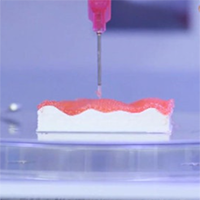
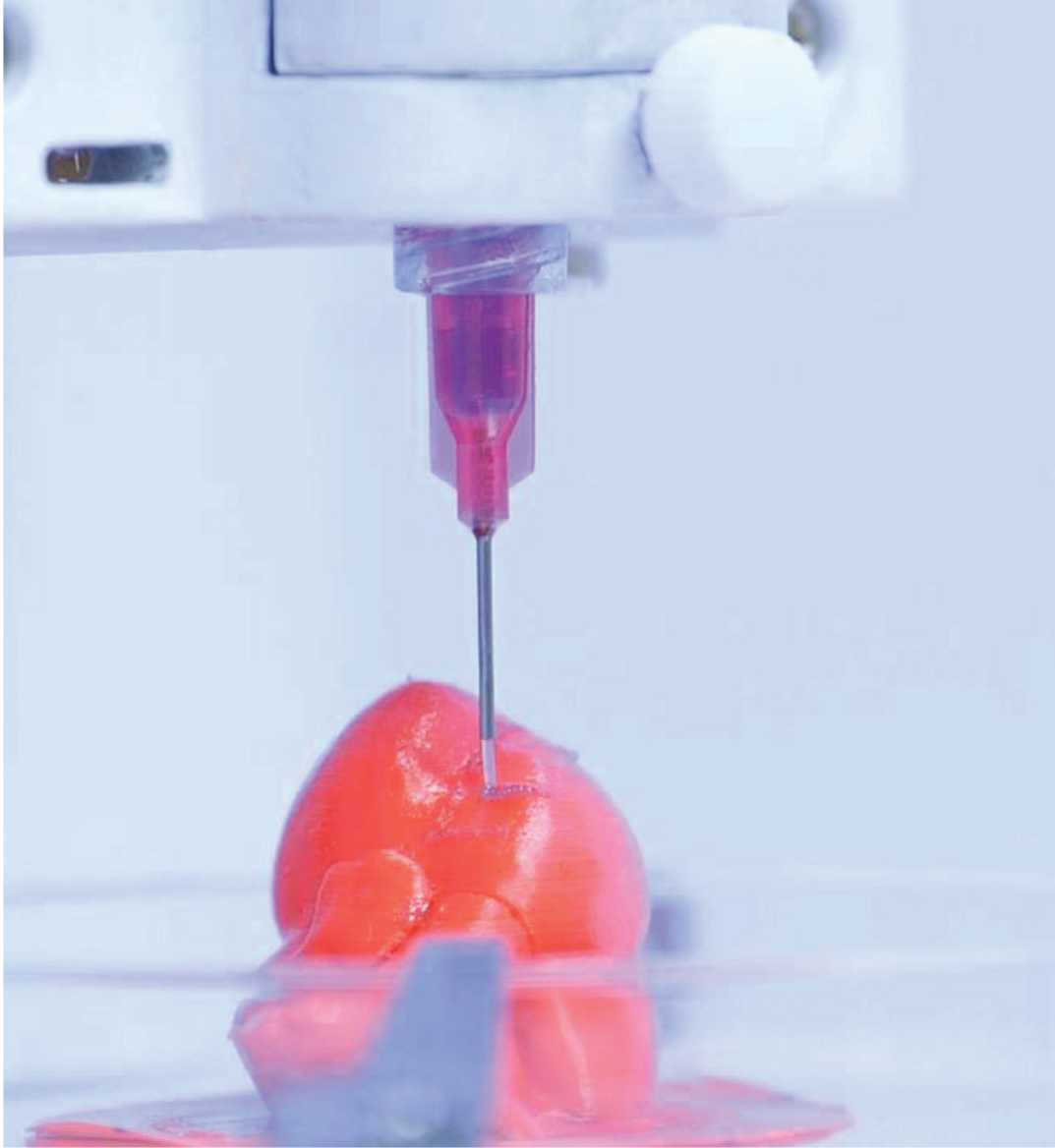
The growing push for 3-D tissue models is limited by challenges in automated handling, processing, and scalability of the technology to various types of materials and high-throughput applications. To meet these challenges, 4D bioprinting and human-cell derived ECM bioinks can allow researchers to biologically mimic the formation of complex, heterogeneous 3-D structures and to scale the technology to high-throughput and clinically translatable applications. This webinar will discuss the latest megatrends behind bioprinting developments as well as scientific and medical applications developed for tissue engineering, regenerative medicine, preclinical screening and testing, veterinary medicine, as well as personalized drug and food development. Some key topics to be discussed include:
Key advantages of 3D bioprinting over other techniques
Alterations in cellular physiology of cells in 3D vs. 2D
Megatrends behind bioprinting’s importance in biomedicine
Introduction of biomedical applications of bioprinting across various disciplines
ROKIT Healthcare’s work in clinical translation of bioprinting in the operating room
Built-in cell incubator, diverse material use, and high-throughput capabilities of all-in-one bioprinting platforms
The seminar reinforces the significance of bioprinting advancements in the age of Industry 4.0 – as a movement aligned with global megatrends in healthcare toward personalized medicine, computer-aided production of biological processes, and autologous regenerative therapy.
Guest Speaker:
• Da-Yae Lee Senior Bio-Consultant & Project Leader
When:
Thursday 8 September 9-10 am – Conference (in-person & virtual) 10:00 am- 12:00 pm – Workshop (limited spaces,
priority to 1st registered)
Where:
Conference room at the Centre
Québecois d’Innovation en
Biotechnologie (CQIB),
500 Bd Cartier O, Laval, QC H7V 5B7